
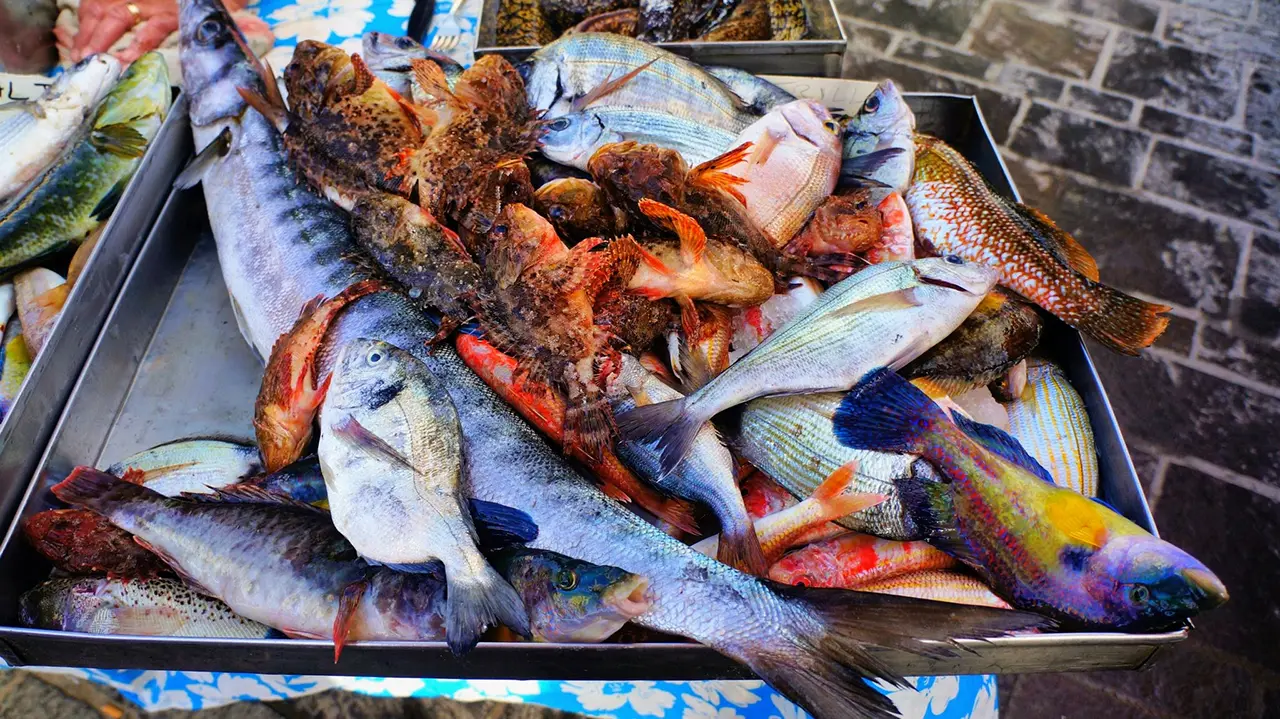
When the Sea Fed the Village: A Forgotten Rhythm of Fish and Tide
There was a time when Gozo turned its gaze to the sea not for recreation, but for sustenance. When the village’s next meal didn’t come from a supermarket freezer, but from the tide — fresh, fickle, and deeply woven into the rhythm of life. Before mass imports and deep freezers, the sea fed the village. And people lived, quite literally, by the catch of the day.
You’d hear it in the morning: the putter of a luzzu engine returning to shore. You’d see it in the baskets slung over shoulders — silver flashes of vopi, cerna, kavalli, sometimes a precious lampuka or two. And you’d smell it: the salt, the scale, the seaweed — mixed with garlic already sizzling on the stove before the fish was even cleaned.
A Seasonal Economy
Fishing in Gozo wasn’t a profession for most — it was a necessity. Many families fished to supplement their food. They knew the seasons, the migratory patterns, the moon phases. They knew that lampuki season came with late summer, that allegra and sardin appeared in early spring, and that sometimes, there was nothing at all. The sea gave, but only when it wanted to.
This wasn’t a world of abundance. It was a world of enough. A few fish, cooked simply with tomato, onion, capers, and olive oil — served with boiled potatoes or bread. The flavours were clean, honest, and often different from one day to the next. Fish wasn’t chosen; it was accepted.
Cooking from the Sea
These dishes weren’t written down. They lived in the hands of grandmothers, in habits passed from one set of fingers to another. Aljotta — a humble fish broth made with rice, garlic, and herbs — was a staple. So was lampuki pie, with its flaky crust and soft layers of fish, spinach, olives, and cauliflower. Leftovers were rare. Bones were used for stock. Nothing was wasted.
And every family had their own way — a different herb, a longer simmer, a thicker broth. But the constant was freshness. The idea that fish should be eaten the day it was caught. Not frozen. Not flown in. Not shrink-wrapped.
What Changed?
The change came slowly — then suddenly. Freezers became normal. Fish shops started importing. Restaurants began offering the same species year-round. Soon, people forgot when lampuki was meant to appear. Sardines started coming from Spain. Tuna came in tins. Fish lost its season — and with it, its story.
Today, many locals under 40 have never caught a fish. Some have never even eaten one that wasn’t frozen. Fishing, once a community act, has become niche — a profession or a pastime, not a necessity. The village no longer waits at the shore.
What We’ve Lost
We’ve lost a sense of rhythm — the knowledge that food had a time and a place. We’ve lost the skill of recognising freshness by smell alone. We’ve lost the taste of fish that was caught at dawn and eaten by dusk. And we’ve lost the respect that comes from knowing that what’s on your plate came from the same waters you swam in as a child.
But most of all, we’ve lost connection. With the sea. With the tide. With the humble understanding that some days, the sea gives you plenty — and others, it gives you nothing at all.
A Way Back
It’s not too late. Visit a fish stall early in the morning. Ask what was caught locally. Learn the names — bogue, pagell, sargu. Cook it simply. Salt, oil, lemon. Let the fish speak. And in that flavour, you might taste something old — a rhythm, a memory, a coastline that once fed a village, one tide at a time.