
Tomatoes on the Roof: Gozo’s Sweetest Summer Ritual
There are days in late July when the island slows to a stillness so complete you can almost hear the heat. The stone walls radiate warmth, the sea retreats to a lazy shimmer, and the wind, when it moves, does so like it’s thinking twice. It’s on days like this that Gozo makes sun-dried tomatoes.
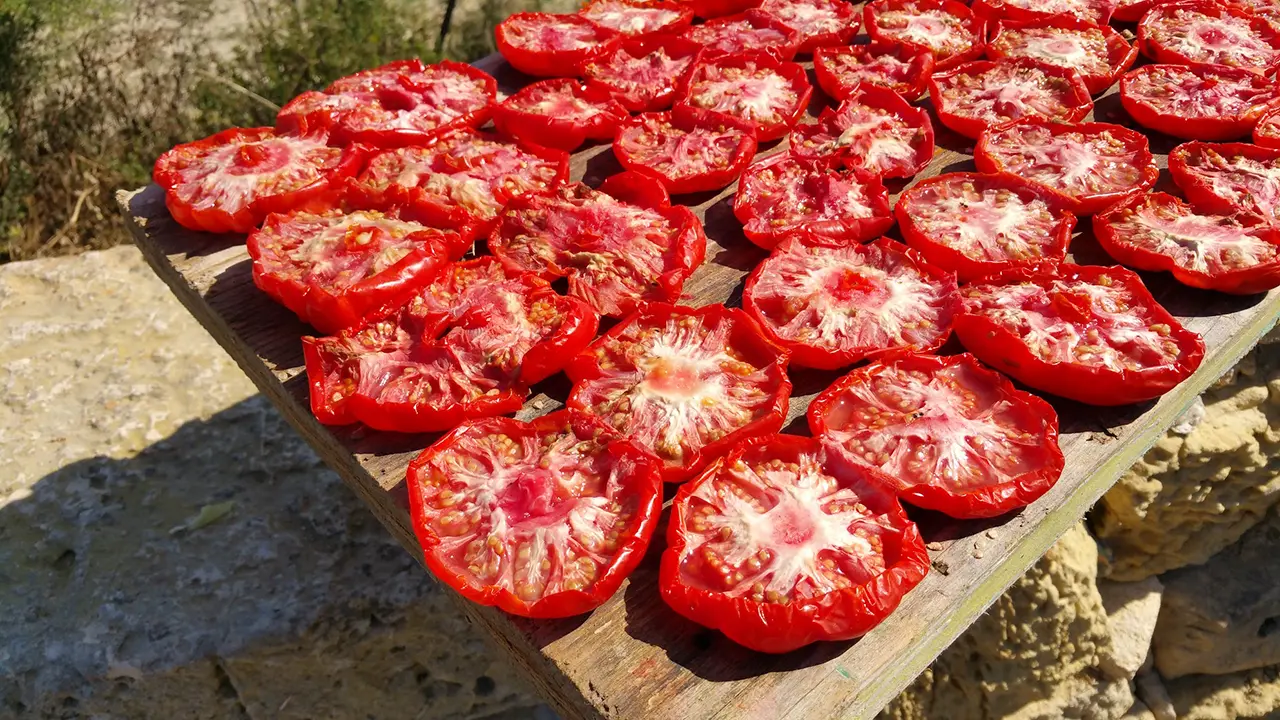
Not in factories. Not in dehydrators. But on rooftops, verandas, and low stone terraces — spread across wooden boards or old mesh crates, halved and salted, and left to dry beneath the raw Mediterranean sun.
It’s a sight that’s quietly iconic. Rows of vivid red tomatoes, glistening slightly in their own juices, slowly shrivelling under open skies. Some are covered with gauze to keep flies away. Others are guarded only by the sun and habit. In the background: a courtyard dog sleeping, someone sweeping, the clink of a glass indoors. The tomatoes do their work in silence.
Why Gozo’s Sun-Dried Tomatoes Taste Different
The flavour of a Gozitan sun-dried tomato is intense — sweet, slightly chewy, faintly tangy. It tastes like summer held still. But what makes it different from supermarket versions?
Partly, it’s the tomato itself. Many Gozitan families still use locally grown plum or San Marzano-style varieties — dense, meaty, with low moisture and few seeds. These tomatoes ripen slowly under the Maltese sun, gathering sugars and flavour over time.
But mostly, it’s the process. No machines, no artificial heat — just salt and sunlight. Over several days (and sometimes weeks), the tomatoes gradually collapse inward, concentrating their sugars while losing moisture. The flavour deepens naturally — sweet, earthy, and rich without ever being sharp or acidic.
The Rhythm of the Season
Drying tomatoes isn’t just a method — it’s a seasonal ritual. As early as late June, signs begin to appear: stacked crates of ripe tomatoes in markets, bulk salt purchases, sheets being washed in preparation for outdoor use. By mid-July, rooftops and yards become impromptu drying rooms.
In Gozo, where land and tradition are closely held, this rhythm has persisted even as other seasonal practices fade. It’s a quiet form of preservation — of both food and knowledge.
What Happens After Drying?
Once dried, the tomatoes are brought indoors and stored in jars — sometimes just as they are, but more often packed in oil, with garlic, capers, herbs, or chilli. Some are rehydrated for use in cooking, while others are eaten as-is, like chewy little sunbursts of flavour.
They find their way into ħobż biż-żejt, salads, pasta sauces, or simply served with cheese and olives. But always, there’s the memory of their making — the sun, the salt, the stillness.
A Disappearing View?
Like many traditional practices, rooftop drying isn’t as common as it once was. Busier lifestyles, health regulations, and the convenience of store-bought products have edged into the ritual. But you can still find it — especially in smaller villages like Għarb, San Lawrenz, or Qala, where older generations carry on as they always have.
Walk through Gozo in summer, and if you look up — really look — you might see a flash of red on a rooftop, drying under the sky. A tomato turning into memory.
Try It Yourself
Buy local tomatoes in season, slice them, salt them, and let them dry in the sun for a few days. It’s not fast. But the flavour is worth every hour — and it tastes like Gozo, even if you’re somewhere else.