
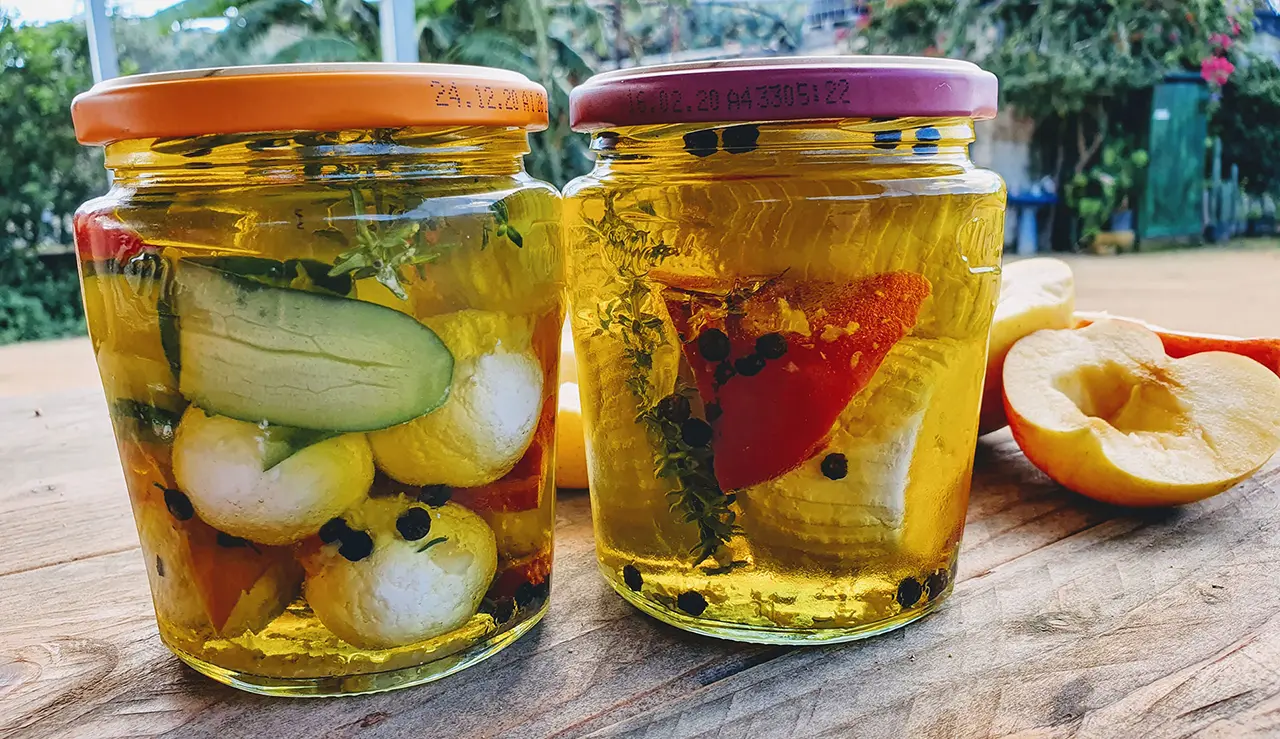
The Lost Art of Pickling: Vinegar, Salt, and the Gozitan Pantry
There was a time when a well-stocked Gozitan pantry didn’t depend on supermarkets or next-day delivery—it depended on foresight, salt, vinegar, and patience. Before refrigeration, before expiry dates printed in black ink, families preserved their seasons in glass jars, tucked behind wooden cupboard doors or stowed in the cool darkness of a cellar.
Pickling wasn’t just a technique. It was a quiet form of self-reliance—one built around the land, the weather, and the understanding that food didn’t always come easy. And while you can still find pickled onions or capers in any Maltese shop today, the act of *making* them—carefully, slowly, intentionally—is becoming a lost rhythm in Gozitan life.
The Taste of Preservation
At its simplest, pickling is about transformation. A bitter caper becomes sharp and floral. A carrot gains crunch and bite. A green olive matures into something deeper, more complex. And all of it is done with nothing more than **vinegar, salt, and time**.
In older Gozitan homes, especially those near Xagħra or Qala, you might still find remnants of this practice: a dusty glass jar of *ġbejniet* stored in oil and vinegar, or a half-forgotten container of pickled wild fennel, once used in soups or eaten with bread and cheese. The smells are unmistakable—sharp, earthy, acidic. Not refined, but real.
Capers: The Gozitan Pickle
No conversation about pickling in Gozo is complete without mentioning **capers**. Picked by hand during the hot, dry months, these tight green buds are everywhere—growing from dry-stone walls, in roadside cracks, and in neglected corners of the countryside.
Traditionally, they were soaked, salted, then brined in vinegar for months. The result? A punchy, floral burst that finds its way into salads, stews, or eaten straight off a slice of bread with olive oil. Locals will tell you: no shop-bought jar quite compares to the ones your grandmother used to make.
The Pickling Table
Ask anyone over 60, and they’ll describe it well: the kitchen table covered in tea towels, bowls of vegetables waiting to be sliced, garlic peeled by the handful, jars boiled clean on the stove. There might be carrots, onions, beetroot, green beans. Nothing was wasted. If it could be pickled, it probably was.
Some families had signature mixes—thin strips of carrot and turnip with vinegar and mustard seed; others relied on brine-heavy ferments stored away for months. And while each recipe varied, one thing remained constant: pickling was a family affair. Something passed down, rarely written down.
The Shift
Today, pickling has become niche. It’s something you might see at a farmer’s market or on a hip café menu—“house-pickled radishes” served with sourdough and local cheese. But it no longer lives in most homes, not like it used to. The jars have been replaced by tins. The rhythm replaced by routine.
Why? Partly convenience. Partly time. And partly because the *need* is gone—modern food systems have made sure we can eat out of season, endlessly. But with that convenience, we lose something: the slow, tactile knowledge of how to preserve flavour, how to stretch a good harvest into the lean months, and how to make vinegar, garlic, and salt taste like foresight.
Why It’s Worth Remembering
Pickling isn’t just about keeping food from spoiling—it’s about capturing time. A jar of summer capers opened in December is more than garnish—it’s a memory, preserved in acid. It reminds you that food has a season, and that the best flavours often take days, not minutes.
And pickled things speak of Gozo in a way that few imported goods ever could. They reflect the land—the wild herbs, the sea air, the harsh sun—and the people, who once knew exactly how to bottle it all.
Want to Try?
Buy a few fresh capers or onions next time you're at the market. Salt them, wait, then add vinegar and your favourite herbs. It won’t be instant—but in a few weeks, you’ll have something money can't quite buy: a taste of the Gozitan past, made in your own kitchen.