
In Search of the Real Ġbejna: A Journey Through Gozo’s Most Iconic Cheese
It begins with a basket. Not one you’d carry to market, but a small, palm-sized mould—traditionally woven from dried reeds—that gives shape to one of Gozo’s most beloved culinary icons: the ġbejna.
On a cool winter morning, somewhere between Victoria and Għarb, a farmer pours fresh sheep’s milk into a plastic mould. He tells me that the reed ones are rare now—too delicate, too hard to sanitise. “But the cheese doesn’t mind,” he shrugs. “It still remembers.”
And perhaps that’s true. Because ġbejna, for all its simplicity, carries memory. It holds the story of Gozo’s land, its people, and their seasons. But what makes a ġbejna real? That’s the question I’ve come here to answer.
Milk, Season, and Memory
Traditionally, ġbejna was made from raw sheep’s milk—high in fat, rich in flavour, and most abundant during the cooler months. In winter, the island’s hills turn green, the sheep graze freely, and the milk flows thick and creamy. Cheese made in this season—ġbejna friska—is soft, delicate, slightly tangy. It's meant to be eaten fresh, perhaps with a slice of crusty bread, a tomato, and a drizzle of oil.
But as the months grow warmer, sheep’s milk becomes scarce. Goats, more heat-tolerant, take over. Their milk is leaner, tangier, and it lends itself to firmer cheeses—like the ġbejna niexfa, dried in the sun until hard, salty, and capable of being grated like Parmesan. Some producers, especially those catering to supermarkets, turn to cow’s milk blends. The result is uniform, predictable. Technically correct, perhaps, but lacking the complexity that comes from animals fed on wild thyme and sun-dried grass.
From Reed to Plastic
Years ago, ġbejna would be shaped in ċagħaq tal-qasba—baskets woven from reeds that allowed the whey to drain naturally, imprinting the cheese with a ridged, rustic texture. You can still find these in old kitchens, gathering dust like forgotten tools. Today, most dairies use plastic moulds: easier to clean, cheaper to replace, and compliant with health regulations.
Some say the change doesn’t matter. Others claim it alters the drying process, affecting both flavour and texture. I’m inclined to believe both camps. The plastic doesn’t lie—but it doesn’t speak, either.
The Forms it Takes
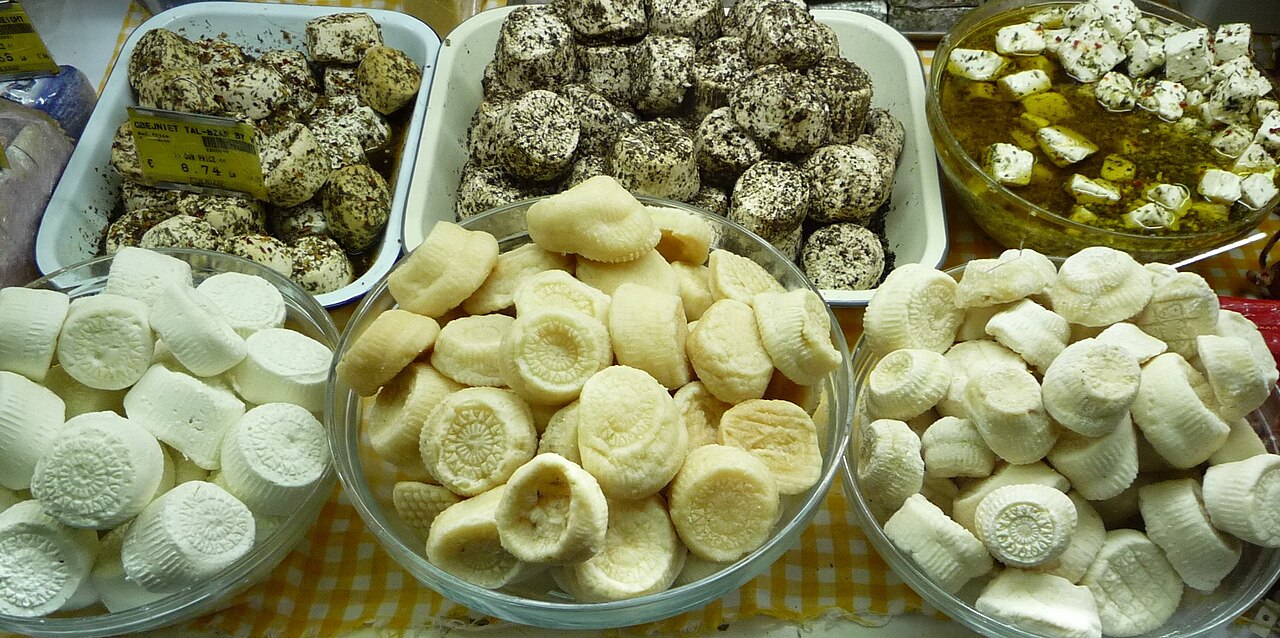
In Gozo, ġbejna is not just one thing. It adapts. It evolves. The fresh kind—ġbejna friska—is eaten within days. The peppered version—talbżar—is rolled in cracked black pepper and left to semi-dry, developing a robust flavour perfect with wine or olives. Dried—niexfa—it becomes salty and sharp, almost crumbly. And then there’s maħsula, washed in vinegar or wine and brined until it carries a pungency that cheese lovers either revere or reject.
No two are exactly alike. And that’s the point. Ġbejna reflects the hands that make it, the weather of the week, the type of milk, and the patience of its maker. It’s not just cheese—it’s craftsmanship preserved in curd.
Buying Cheese, Buying Time
You can buy ġbejniet at the It-Tokk market in Victoria. Ask around and someone will point you to a stall with a basket of fresh ones, still damp, barely salted. Or take the winding road to Marsalforn, where a family might sell peppered ones from a roadside table beneath a faded umbrella. For something more structured, visit Ta’ Mena Estate or Ta’ Rikardu inside the Citadel—producers who straddle the line between tradition and tourism with some grace.
But don’t just ask for ġbejna. Ask what kind. Ask when it was made. Ask if the milk was sheep or goat. You’ll hear stories—about animals, seasons, and sometimes grandmothers who used to dry cheese on the roof in the sun. That’s how you know it’s real.
So, What Makes it ‘Real’?
There’s no single answer. Some say it’s only real if it’s made with sheep’s milk. Others insist on the drying method, or the use of raw milk, or baskets woven by hand. But perhaps the real ġbejna isn’t a checklist—it’s a relationship.
If it speaks of the island—of stone walls, wind-dried thyme, and salt from the sea—then it’s ġbejna. If it carries the memory of winter’s richness or summer’s austerity, it’s ġbejna. If you bite into it and time slows down just enough to notice, it’s ġbejna.
And if it came from a plastic mould, but was made with care and eaten with joy? Maybe it’s still ġbejna. Just a modern one, telling an older story in a new way.
Planning a Visit?
If you're coming to Gozo, don’t settle for supermarket ġbejniet. Follow the cheese trail. Taste with curiosity. Ask questions. And remember: the real ġbejna is the one that makes you feel like you're eating a piece of the island itself.